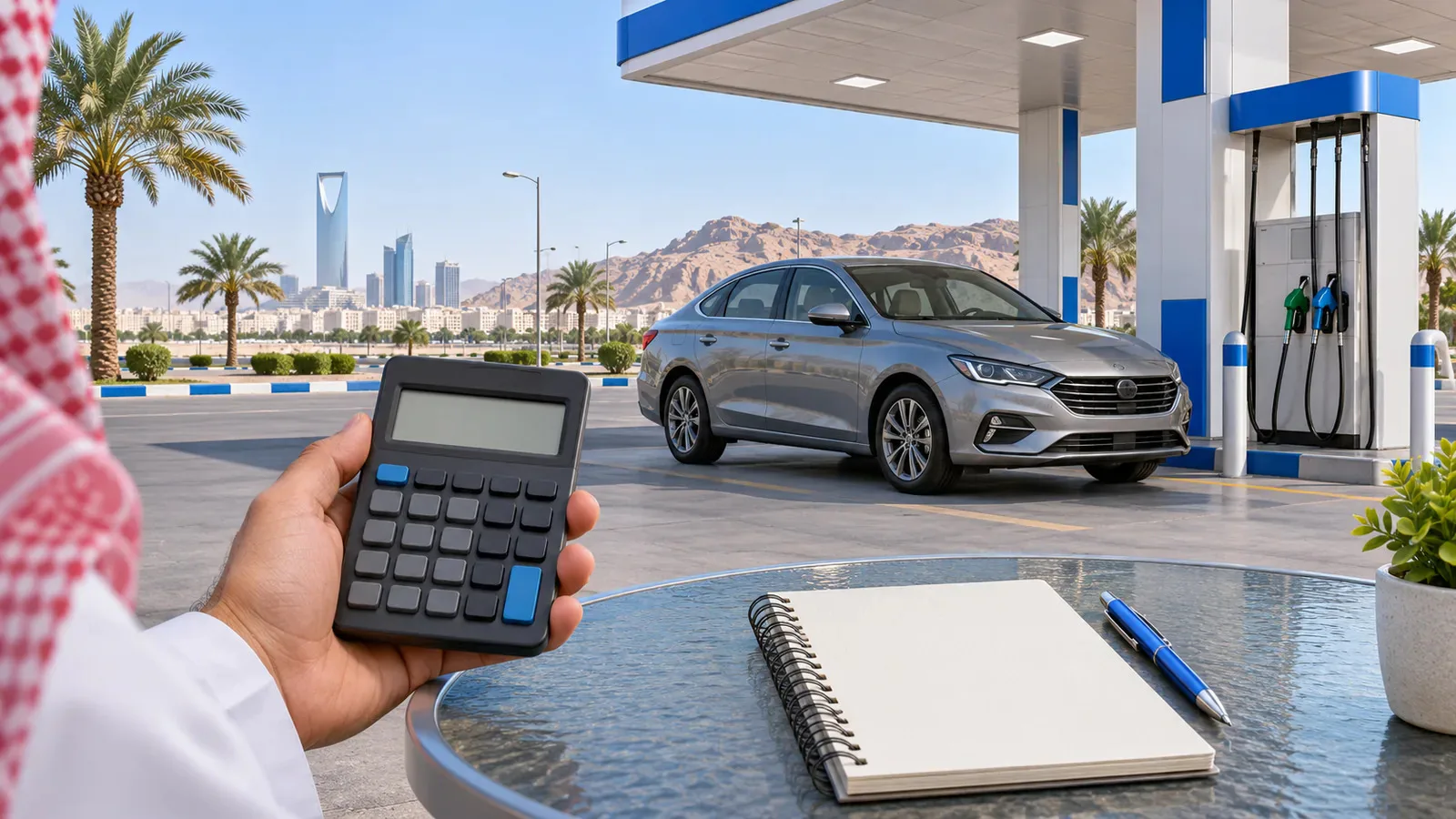

To find a gas station near you, open your phone's map while safely parked, allow location access if you choose, and search for a fuel station. Open a suitable result and inspect the route before starting navigation. On a journey, compare stops along your route rather than straight-line distance alone. A slightly farther station may have a more convenient entrance than the nearest pin across the road.
Open the fuel-station map search and choose a destination that fits your direction of travel. The link opens a search rather than selecting one fixed station for every reader. Your starting point, intended route and need for a break or supplies all affect the choice. Decide what matters before concentrating on a brand name or review count, so the stop fits the journey instead of becoming a separate trip.
Check the real starting point
If you open the map at home but the car is elsewhere, make sure the route starts where you will actually leave. For an area you plan to visit, move the map or search by district or road name. An old starting point can distort the comparison. Read the city and area shown in the result, especially where several stations or branches have similar names.
You do not need to share your whereabouts with a stranger to ask about fuel. You can search an area by name or set a starting point manually in your chosen map. If a family member needs a meeting location, share the place relevant to that purpose rather than unnecessary journey details. Complete the search while safely stopped, or let a passenger handle route checking while the vehicle is moving.
Nearest to the car or easiest along the route?
Compare the actual journey and estimated arrival time, not just the distance beside a name. Inspect the entrance, junctions and any need to leave the road or turn back. Never make an unlawful manoeuvre simply because a station looks close on the screen. Follow the safe, permitted approach indicated by the road and its signs, even if that changes your initial choice.
In a hypothetical comparison, a station two kilometres away may appear preferable to one four kilometres away. Yet the first could require a long return journey while the second lies directly ahead. Compare the complete stop and return to your route rather than those two numbers. These are illustrative distances, not a description of a particular Saudi road or a promise about journey time.
| Hypothetical option | Useful comparison |
|---|---|
| Station A: 2 km away, requires returning | Check the entire approach and return route |
| Station B: 4 km ahead on your route | Compare its effect on the journey |
| Station C: facilities unclear | Check the service you need before leaving |
Plan a main stop and an alternative
Before travelling, choose an initial fuel stop and a later alternative. Review the whole route and search near the section where you expect to stop, rather than using only results around home. Inspect how to enter and rejoin the road, then keep a short list of names or locations. A clear alternative reduces pressure to decide quickly if the first entrance or stopping arrangement does not suit you.
Avoid building the plan around the smallest possible fuel reserve or an optimistic range estimate. Monitor the remaining fuel in the context of your journey without assuming a guaranteed distance after a warning appears. On an unfamiliar route, arrange an earlier refill and review options before moving away from services. Waiting until choices become limited makes an otherwise simple stop harder to organise.
Choose the services your group needs
List the purpose of the stop: fuel only, toilets, a rest, or water and journey supplies. If a particular facility determines your choice, ask about it directly where necessary. A listing's name alone does not establish everything operating there when you arrive. Concentrate on the specific need rather than making the whole decision from an old photograph or a brief description.
For children or someone who needs easier movement, consider parking and the distance to the facility you intend to use. Prepare what you need before getting out and agree on a meeting point. These small decisions make the stop clearer. For camping journeys, the camping tent selection guide helps prepare the destination, while fuel and rest-stop planning remains a separate task to complete before you reach it.
Use official geographic resources appropriately
Government geographic resources can complement an everyday navigation map. The Asir Explorer includes a fuel-station layer among its listed facilities. The Ministry of Municipalities and Housing also describes Balady Maps and navigation. Choose an appropriate tool for the area and purpose, and inspect its coverage rather than assuming every map contains identical information or offers the same functions.
A map used to explore services does not itself confirm fuel availability or every facility's operation at your arrival time. Combine location and routing with a direct question when an important need requires it. An investment or planning map should not be treated as proof of a currently open public entrance. Understanding what a resource is intended to show makes its information more useful.
Know the fuel required before approaching the pump
Establish the appropriate fuel from your vehicle's instructions and information, rather than choosing what a similar-looking car uses. State your request and check the intended pump before filling begins. Resolve uncertainty first instead of trying an option on the assumption that it is correct. Price alone should not determine a change away from the fuel suitable for your vehicle.
If you are comparing vehicles before buying, separate today's refill from a longer-term consumption calculation. The hybrid versus petrol comparison based on actual use can help organise that calculation. Choosing a station for this journey concerns the car you have and a suitable route, without promising a fixed saving or applying another driver's experience to different circumstances.
Let safety determine the final approach
Follow the station's signs and staff instructions, switch off the engine during refuelling and do not smoke near pumps. The fuel-station safety regulations address fire protection; your practical responsibility is to follow the displayed directions rather than allowing urgency to override them. A navigation pin is not permission to enter against traffic or use a closed entrance.
Park where appropriate for the service you need. After filling, move to a suitable parking space for a longer break where possible instead of occupying a pump unnecessarily. Review your request and payment before leaving, and keep a receipt when needed. If something requires follow-up, record the location, time and issue clearly rather than relying on a general description that does not identify the transaction.
Do not confuse a fuel stop with breakdown support
You might be searching for a station when the real reason to stop is fatigue, a fault or unusual vehicle behaviour. Separate those situations from routine refuelling. A nearby pump does not establish that appropriate inspection or repair is available. Do not continue solely because another station appears a few kilometres ahead; follow the vehicle's instructions and obtain suitable help if continuing is unsafe.
Before a long journey, address an issue you already know about rather than planning to solve it on the road. If cooling performance is a concern, the guide to weak car AC cooling helps organise inspection questions. A refill should not become a substitute for dealing with an existing fault, and a station's additional service should not be assumed suitable without checking what it actually provides.
For a route you repeat, keep a short list of convenient stops and note what needs checking on each journey. A previous successful visit does not replace reading the current road or considering your passengers' needs. A simple journey expense record can also be useful, provided you distinguish fuel purchased from distance actually travelled before drawing conclusions about consumption.
A short plan before setting off
Choose a first destination that fits your direction and an alternative you can reach without confusion. Review fuel needs, facilities and road access, then save the location information before moving. If the journey changes, compare options again from a safe stopping place. “Gas station near me” becomes a useful starting point when the search ends in a suitable stop, rather than simply the closest pin on a screen.